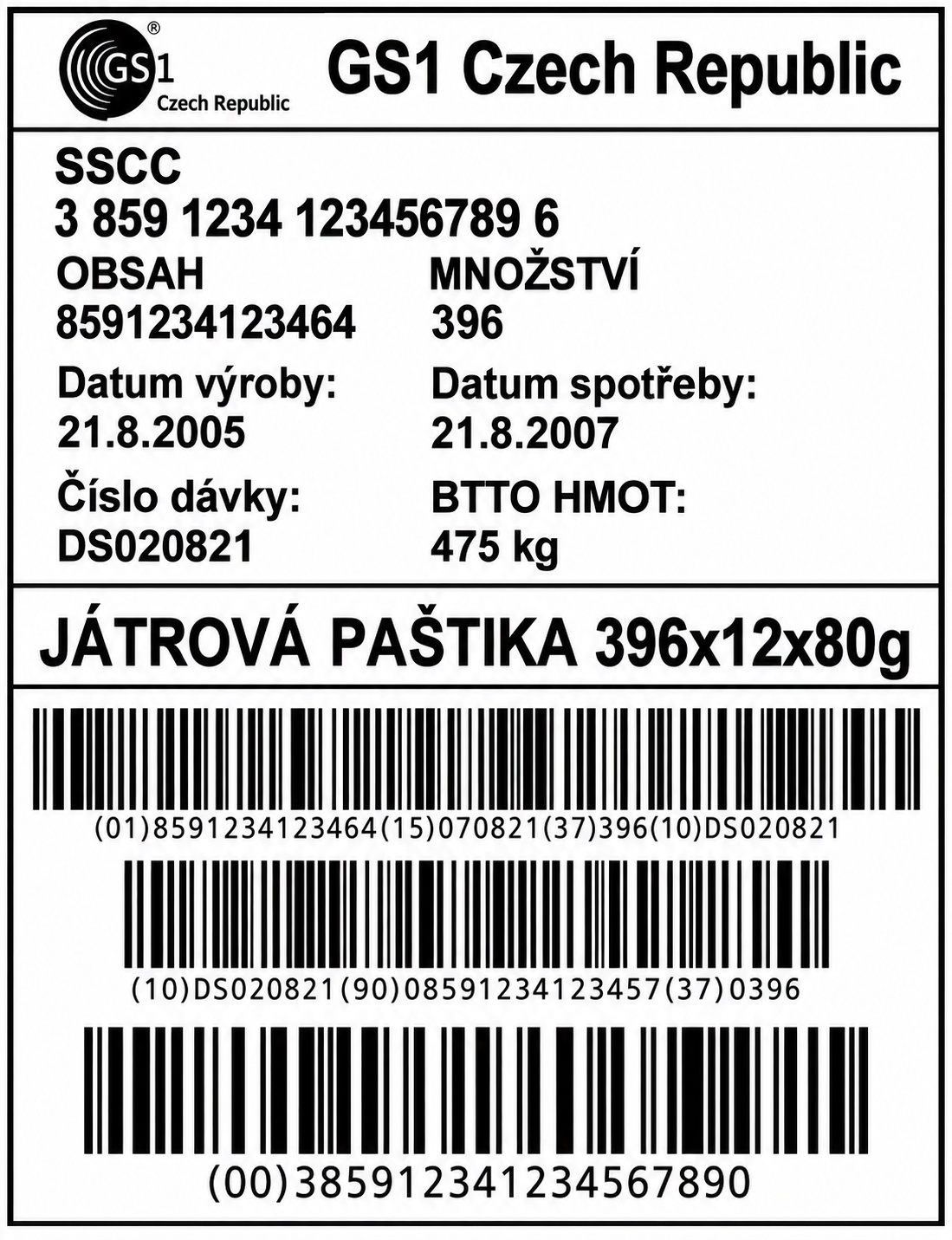
A GS1-128 barcode carries several values packed one after another, not one. Each starts with an application identifier — two or four digits saying what follows. 01 is the GTIN, 10 the batch, 17 the expiry date, 00 the pallet SSCC.
The catch is that every identifier has its own rules. A GTIN is exactly 14 digits, an SSCC eighteen, a date six in YYMMDD form. A batch number may be one to twenty characters and letters are allowed. Assemble that by hand into a single string and sooner or later you get it wrong — and find out at goods-in, where the code is rejected.
Fields, not a string
Pick GS1-128 as the barcode type and instead of one text box you get a list. Add an identifier, choose it from the list, fill in the value. The application knows each identifier's name, its permitted length, and whether letters are allowed.
The human-readable line appears below the code in the form the standard prescribes — (01)08590123456789(10)L2026-04. Exactly what ends up on the printed label.
Checked before printing
This is not limited to GS1. Every barcode is validated as you type, and on failure you get the reason rather than an empty placeholder:
- EAN-13 requires 13 digits (12 without the check digit). Entered: 12.
- ITF-14 allows digits only (0–9).
- UPC-E requires 6, 7 or 8 digits. Entered: 9.
The check digit can be calculated for you, so there is no need to enter or work it out.
Why it matters
A bad barcode reveals itself where it is scanned — at goods-in, on the dock, in your customer's warehouse. Until then a printed roll of labels is worthless and the whole run has to be repeated. Catching it in the designer is cheaper.